When a Renovation Brings You Back to the Future
One of the key elements to consider in any extensive renovation of an existing house is how the area around it has changed since it was first constructed. Noise, traffic patterns, and even generational lifestyle changes can affect how homes are used, and therefore how they will be redesigned.
Recently, we were called in to do a major overhaul of a five-bedroom center hall colonial on the Main Line. The interior was outdated and showed decades of wear and tear.
Our client inherited the house from his parents. Now both he and his wife were ready to renovate a home that had been part of their lives for decades. Forty-five years earlier the couple had met at the pool in the backyard.
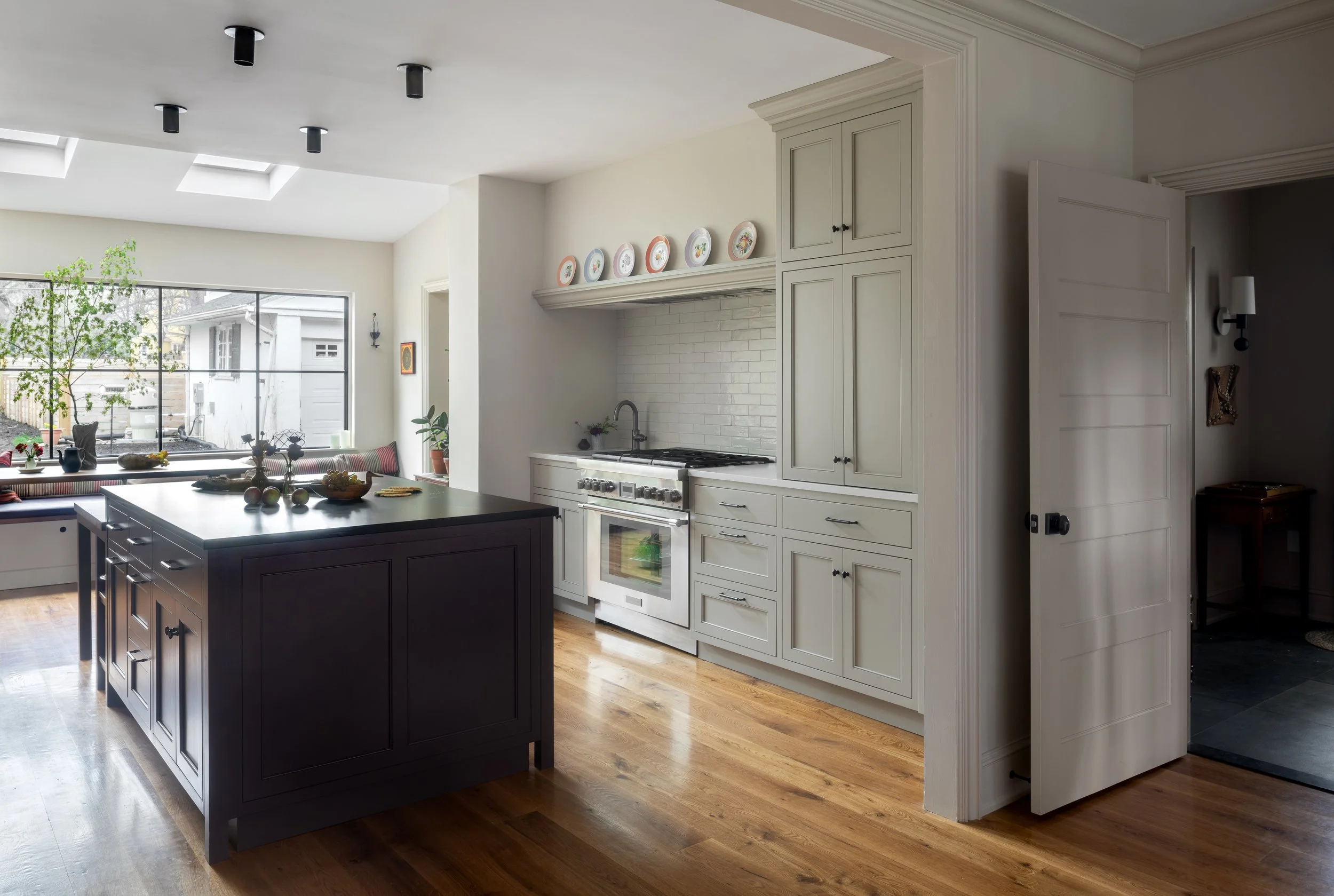
The interior of the house had not been updated since its original purchase in 1960. A key part of our renovation assignment was to keep the feel and character of the original structure while reimagining the space inside. This work included updating the kitchen and four bathrooms.
Originally, the picturesque home, similar to many of the century-old houses on the Main Line, was oriented towards the street to show off its facade. In the years since these types of homes were built, a common issue faced by homeowners is that street traffic has become more intense.
Our client’s house reflected the sensibilities of the era. Indoor/outdoor living was not a priority in the 1920s. While the backyard had mature plantings, it was not too hard to envision it being used by neighborhood children as a makeshift ball field in the 60’s and 70’s.
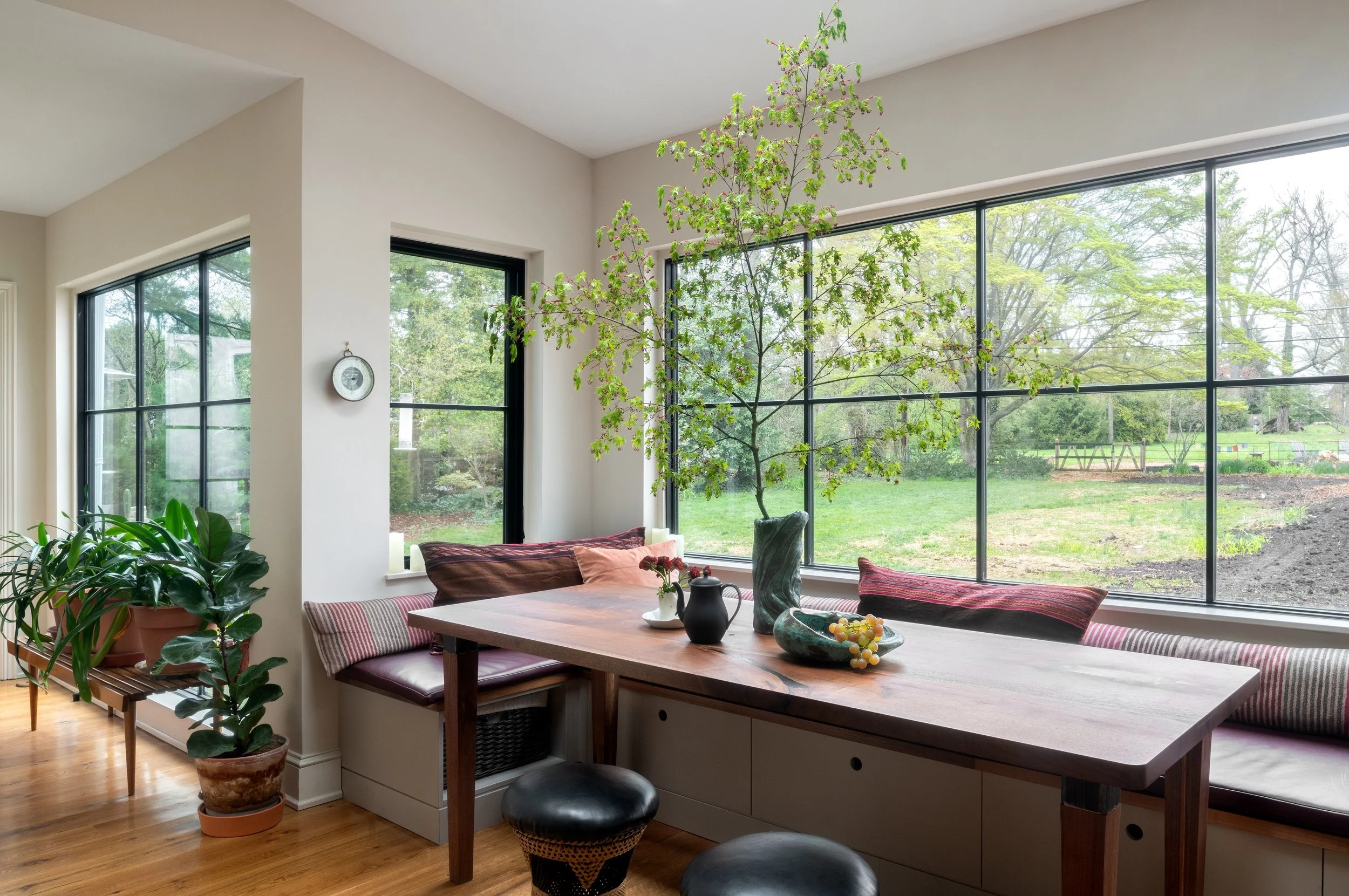
To update the house, we decided with the clients early on that there should be a shift of focus from the front of the home to the back. The centerpiece of this transformation would be a modern single-story addition to the back of the house (expanding the kitchen area), and the installation of patio doors in the living room to access a new back terrace.
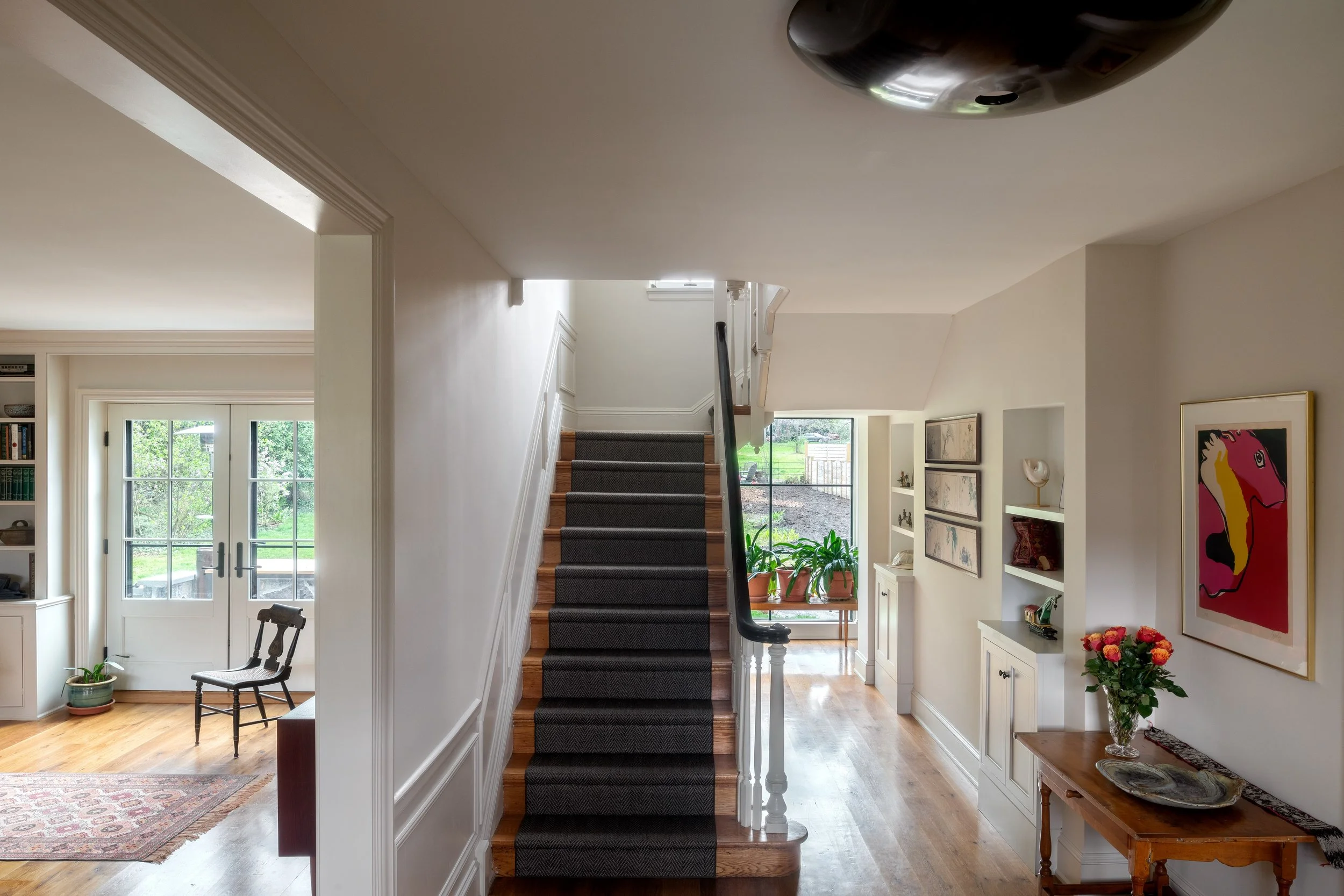
While standing in the center hallway or dining room, the modern glass wall extension focuses attention towards the back of the house. The front of the structure, both inside and outside, retains the character of the original design. Essentially, the backyard is now a resource that the family can use in a way that was never even considered when the home was originally built.
Part of this change was also made possible by the scale of the renovation. The owners decided to replace the existing radiators with a high-velocity HVAC system. The space and access created by removing the radiators allowed for many of the architectural adjustments.
Part of this project started with a single question: “What has changed since this house was built?” The answer to that question can open up great design opportunities, both for what elements of the existing house are important to keep and those that may need to be changed.