Get Away to your Own Backyard
A tiny backyard can be a spiritual oasis. A place where you can reconnect with yourself or the perfect place to sip tea or cocktails with a friend.
When we bought our home in East Falls, a brick twin, it had a small cement backyard patio that had been exclusively used to hang laundry and store trash cans. It also had a very unusual problem. The cement patio was about 10 feet deep and then there was a beautiful stone wall about five feet tall that sectioned off a 25 x 30 feet grassy area above. This meant that there was about 750 square feet of yard that was five feet above the cement patio. The only way to access this area was to climb to the top of the stone wall.
For the first year (or three) that we lived at the house we had an old wooden ladder propped up against the stone wall so that our kids could get to the yard above and play. How this bizarre circumstance came to be we have no idea. But it was then ours to figure out how to make it work.
The cliches are true. Weird problems make for the most innovative design solutions.
Around this time we had a project in my old stomping grounds, the Hudson River Valley. Whenever possible, on the way up there, we always stop at Dia Beacon.
Dia collaborated with American artist Robert Irwin and architect OpenOffice to formulate the plan for the museum building and its exterior setting. The grounds include an entrance court and parking lot with a grove of flowering fruit trees and a formal garden, both of which were designed by Irwin.
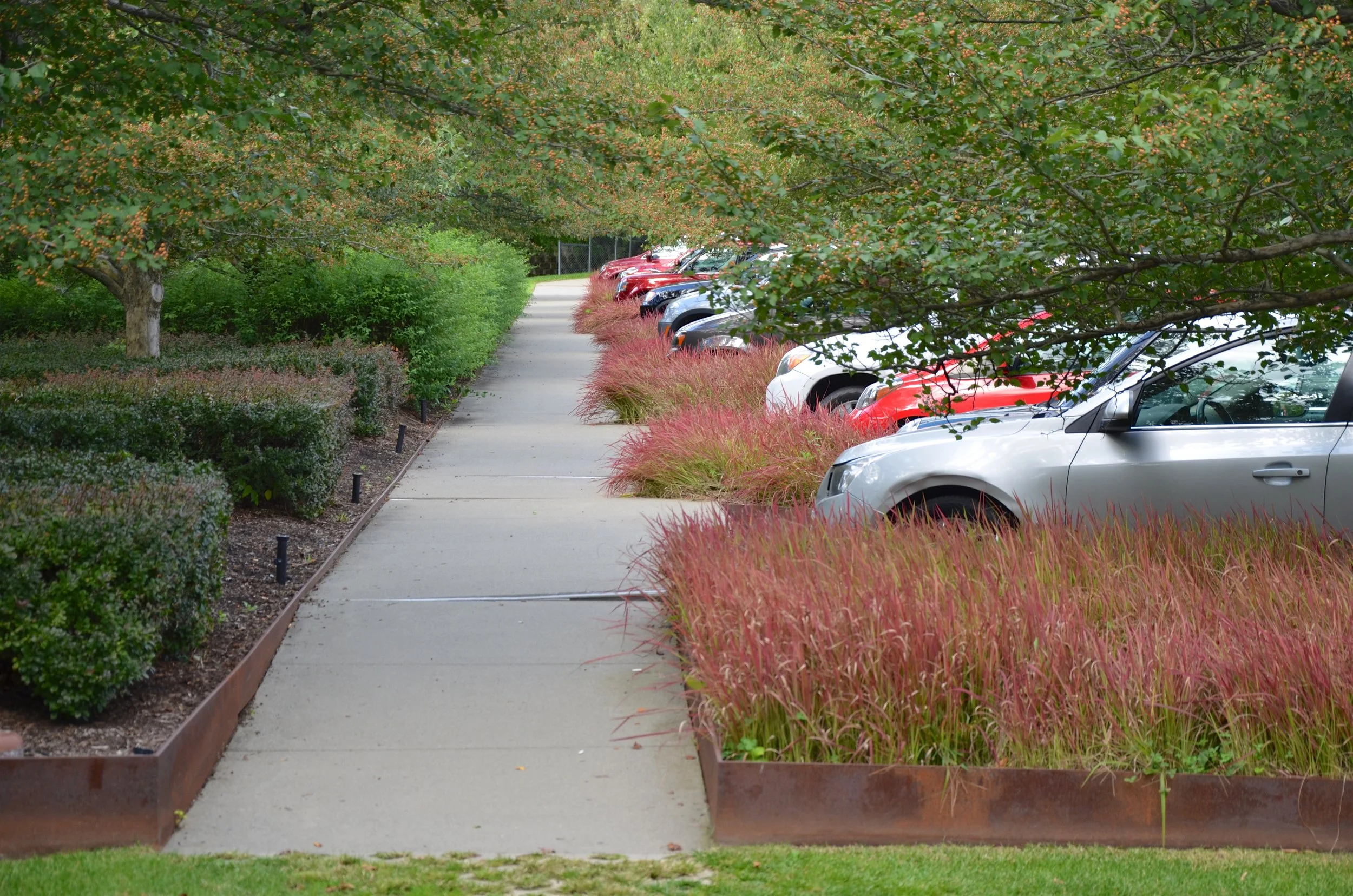
The artist envisioned the museum as a “sequence of experiences” including riding the linear corridor of the Metro North railway up the Hudson River from Grand Central Station in New York City and descending into Dia Beacon’s parking lot. In what I see as a wink to Richard Serra, the parking area used rolled steel to delineate the planting and tree beds from the asphalt.
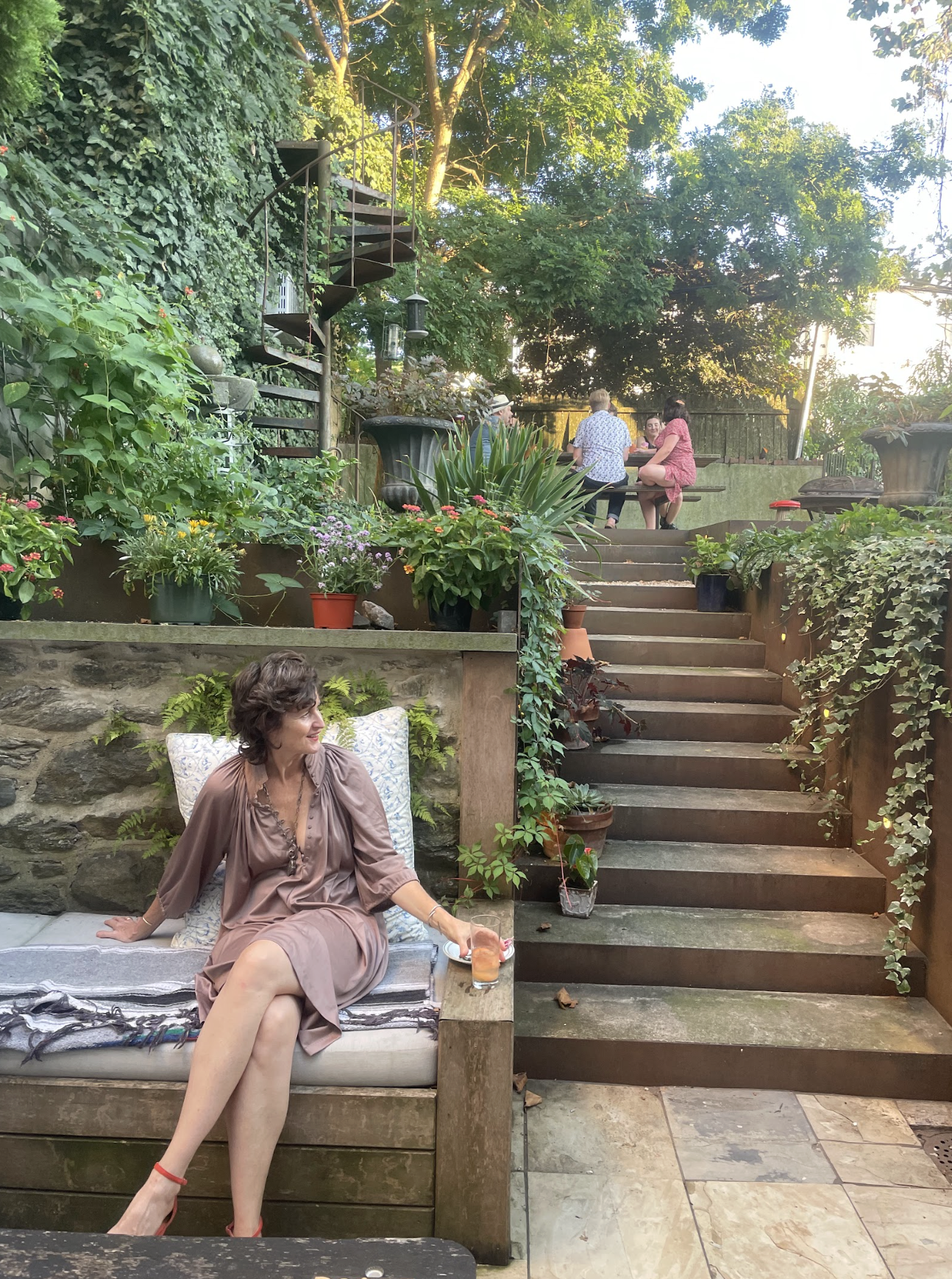
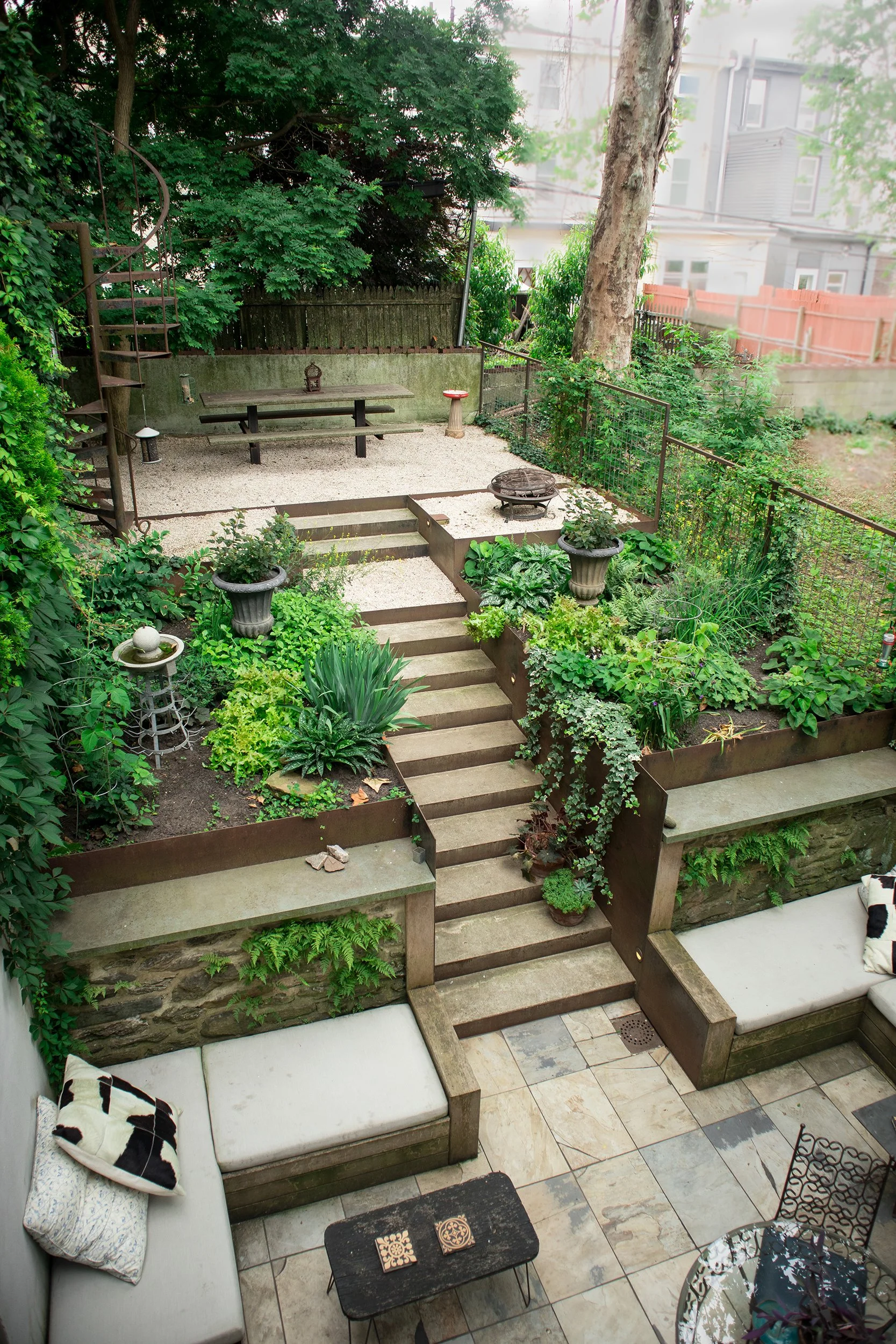
This gave us the idea to use rolled steel to build retaining walls that would brace earth on either side. This would create stairs to the upper yard. We welded cross pieces to the vertical retaining walls. These cross pieces then became the risers of the steps. We poured concrete that would become the step treads. The concrete and steel cross pieces gave the strength to allow the walls to hold the earth on either side of the stairs.
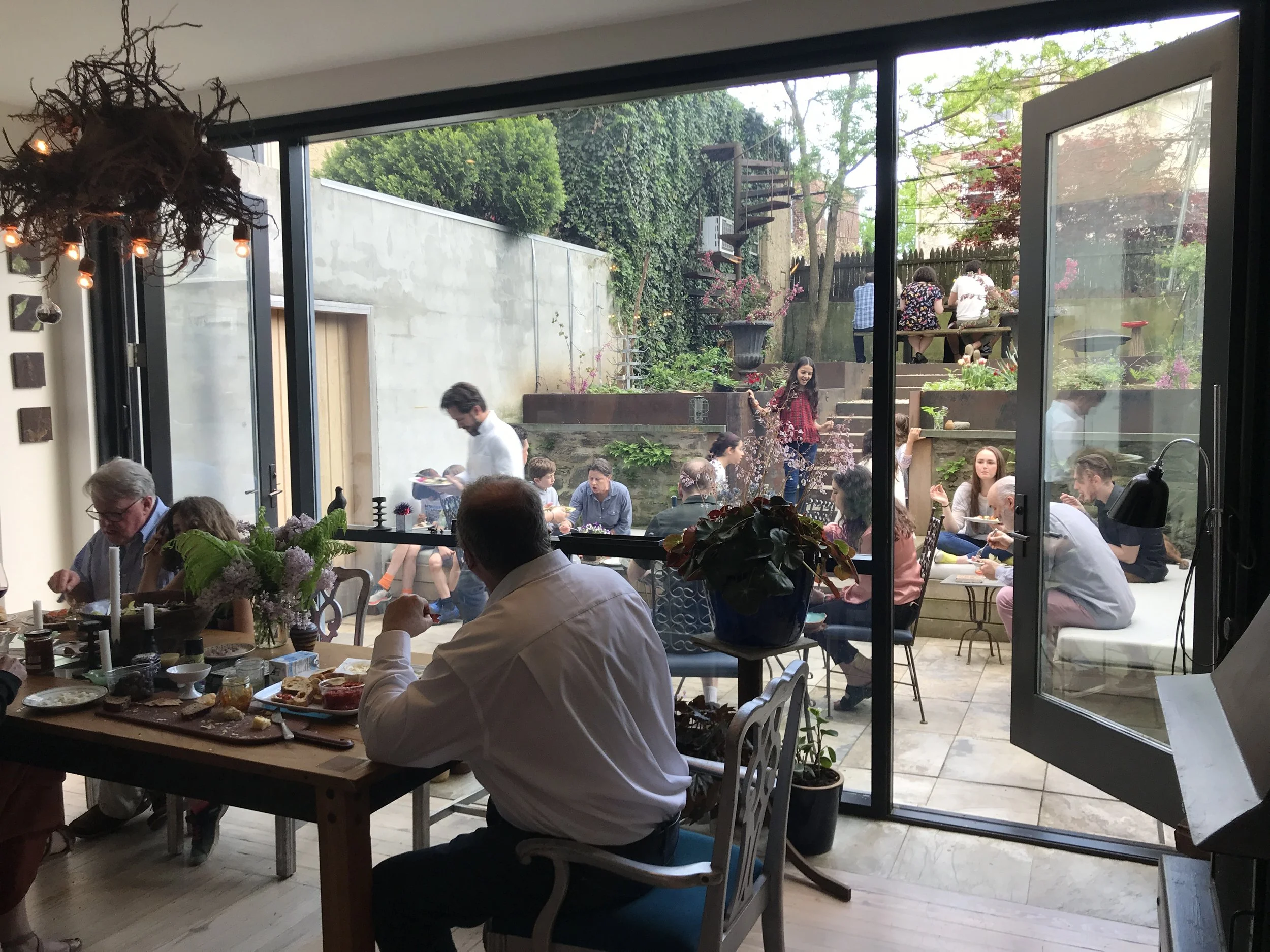
The steps are wide. This allows them to act as stadium type seating when we have garden parties with ample room for potted plants all the way up. We replaced the grass with pea stone so that there would be enough permeable surface to meet the city’s requirements and not create a waterfall down the stairs that would pool at the bottom. The picnic table is steel I beams with wood on top anchored into the ground. This avoids the problem of the feet of outdoor chairs digging into the gravel. We covered the existing concrete at the bottom with bluestone slate tiles. A softly bubbling fountain from Primex in Glenside was the perfect final touch.